
Snow Loader Work, Site Infrastructure Engineering, Macomb County
We treat loader work as part of site infrastructure, not a cleanup task. Snow placement affects sight lines, drainage, curb edges, and how fast a lot opens back up after a storm. In Macomb County, that means planning stack zones before the first push and keeping heavy equipment off weak pavement edges. Our approach fits commercial snow loader contractors who need control, not guesswork. We use wheel loader services, high-stacking operations, and pile knock-down only where the site can take it.
Contact Us Today!
MDOT Standards, Highway-Grade Snow Loading
MDOT prequalification changes how we plan loader work. It tells commercial owners we can handle controlled stacking, tight access, and site protection without treating the lot like a dump zone. We do not guess at pile placement or push snow against weak edges just to move fast. That matters on properties tied to Macomb County traffic patterns, where access has to reopen cleanly and drainage cannot get buried under bad stacking. Highway-grade standards keep the work disciplined.
That is the difference between commodity plowing and industrial snow loader services. We size up load paths, turning room, and pile height before the first pass. Then we use wheel loader services or high-stacking operations only where the pavement structure can take it.

Serving Businesses In Macomb County
Accountability in Every Loader Pass
Accountability means we own the pile, the access lane, and the damage if we make one. We plan loader work around curb lines, catch basins, and weak edges before a storm starts moving snow. If a site near Hall Road needs high-stacking operations or skid steer snow removal to keep traffic open, we choose the method that protects the pavement first. I would rather turn down bad work than push snow where physics says it does not belong.
Sub-Grade First, Pile Later
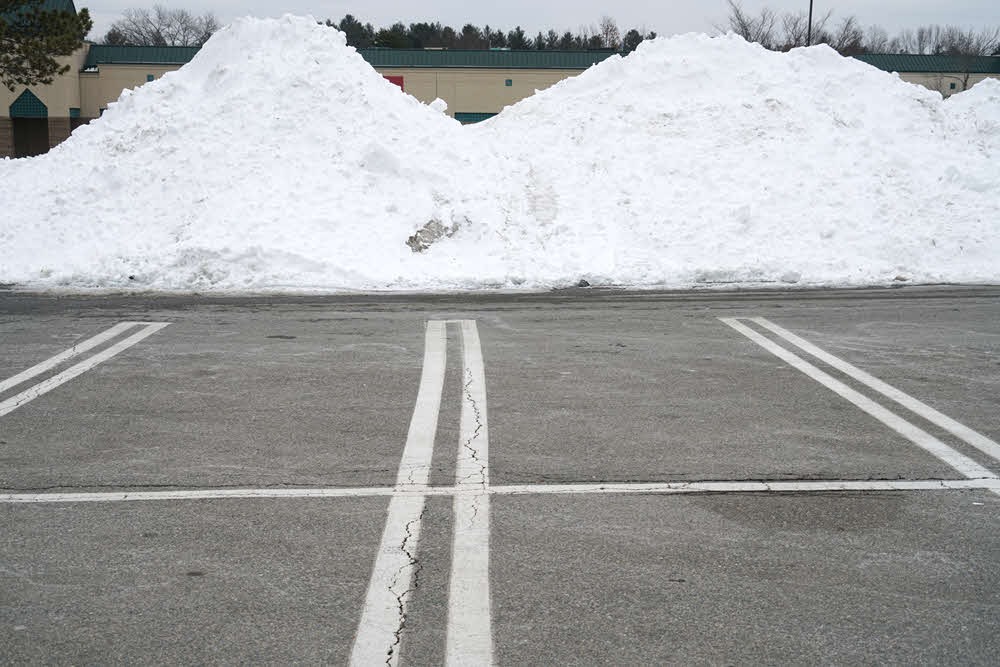
We start with the sub-grade because that is where loader work either holds up or starts failing. Soft edges, trapped water, and weak base sections change how a pile should be built and where equipment should travel. On commercial sites near Hall Road and Schoenherr, we read the ground before we move snow. That keeps wheel loader services and high-stacking operations off the areas most likely to rut, settle, or break down under repeated passes.
Snow can be moved fast. The site still has to carry the load in spring.
Aggregate Gradation Controls Compaction PSI
Aggregate gradation controls how a pile locks together under the bucket. Too much fine material, and the load packs tight but shifts under repeated passes. Too much open stone, and it bridges, then breaks apart when we stack high or push long distances. We watch how the material shears, not just how it looks in the bucket. On sites near Gratiot Avenue and 23 Mile Road, that difference decides whether wheel loader services hold shape or start sloughing at the face.
Compaction PSI matters because snow load piles are not static. They settle, freeze, thaw, and move with traffic vibration. We build them with enough density to stand up without overworking the pavement below. That is where efficient snow loader operations and high-stacking operations stay controlled instead of sloppy.
Drainage Paths Before Snow Stacking
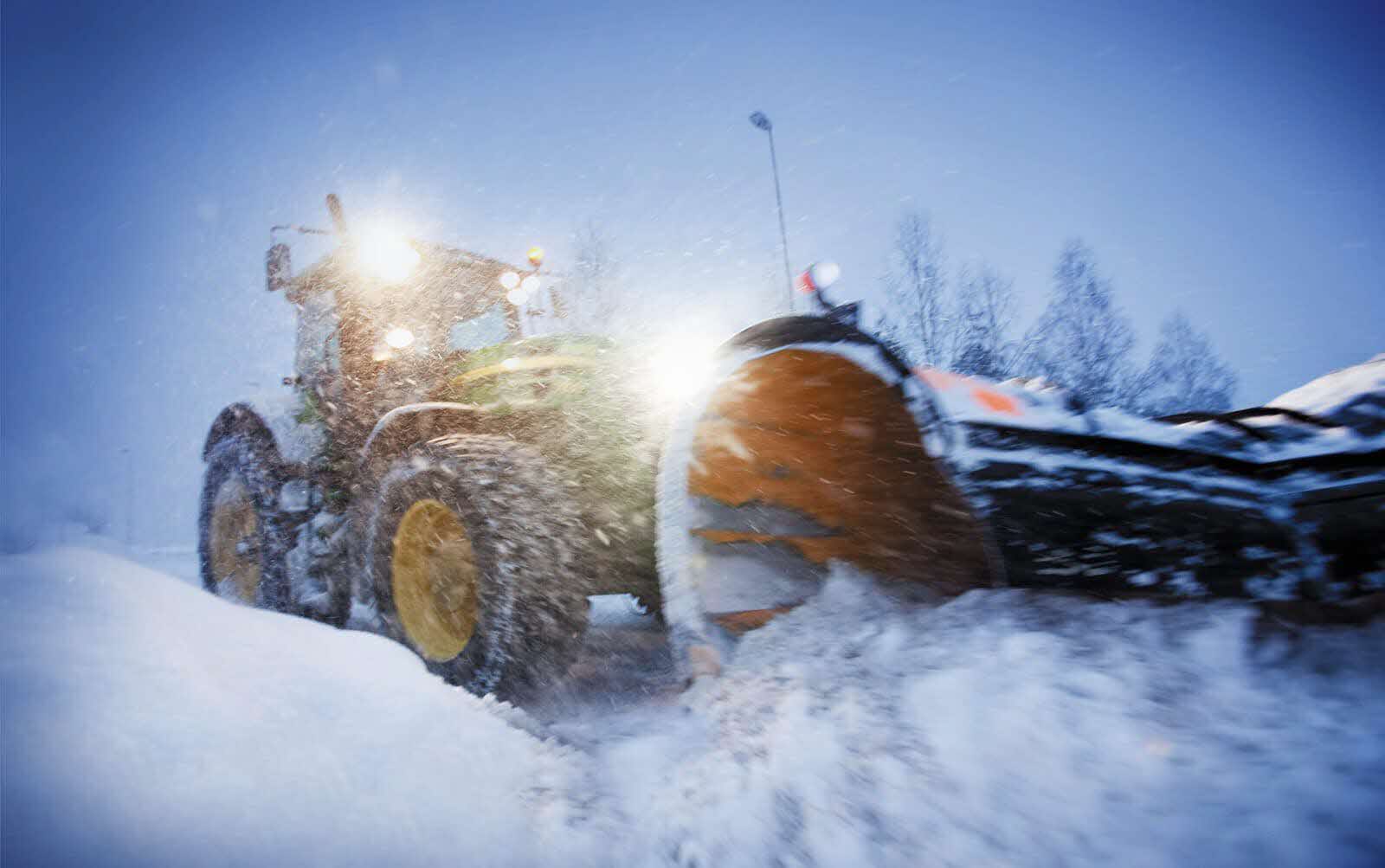
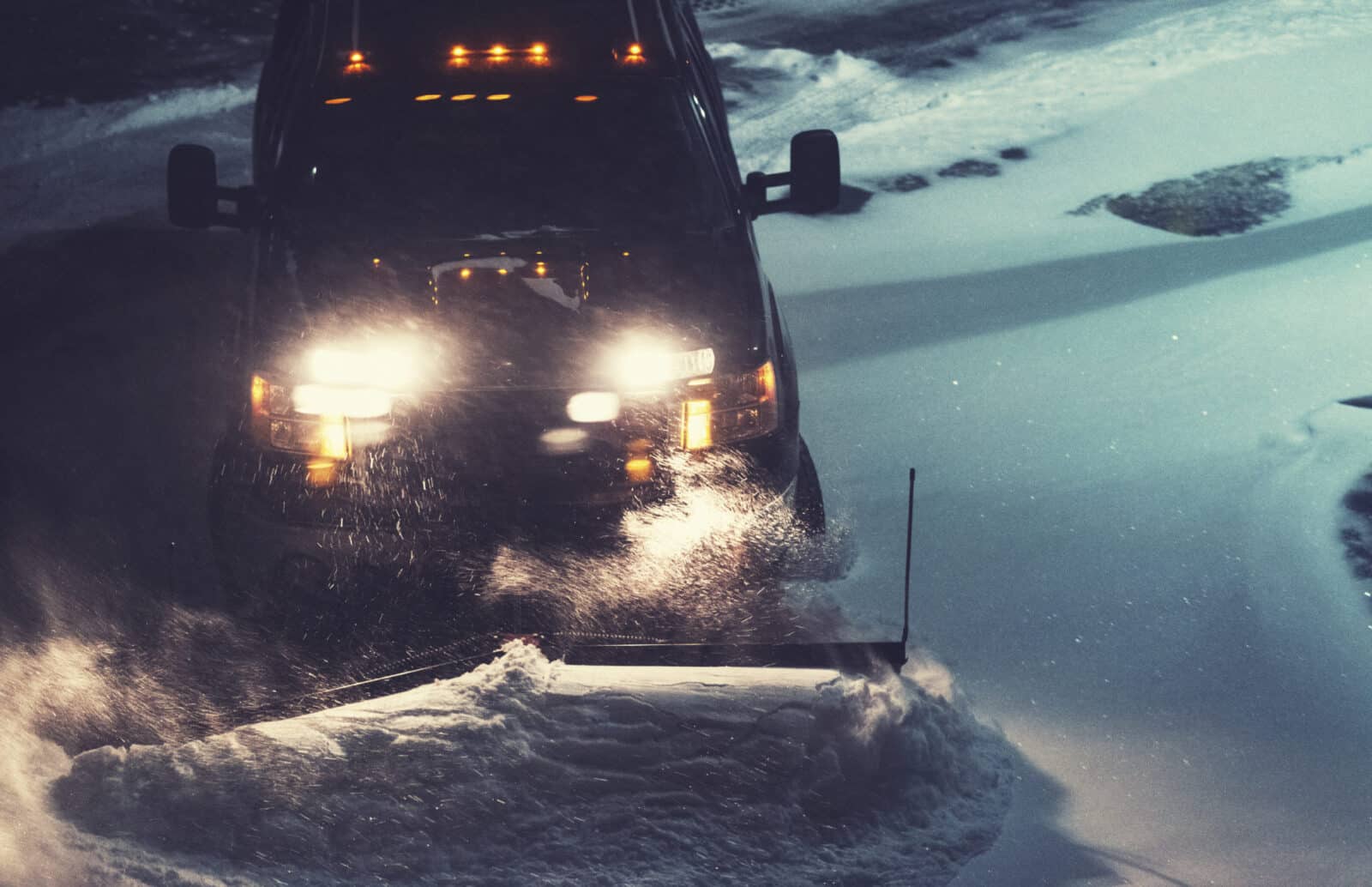
Water has to have somewhere to go before we start stacking snow. If catch basins, swales, or curb inlets get buried, meltwater backs up and freezes where traffic needs to turn. We map those flow paths first, then place piles so runoff can move through the site instead of across it. On properties tied to Hall Road and Schoenherr, that keeps loader work from creating spring problems. Good drainage planning protects pavement life and keeps pile knock-down only from becoming a repair bill.
Freeze-Thaw Surface Layer Specs
Freeze-thaw cycles punish any pile that sheds water slowly. We use surface specs that stay tight under repeated thaw and refreeze, so the face does not slump and the base does not get churned up by loader traffic. On sites near Hall Road, we watch how the top layer breaks under bucket pressure, then adjust stacking height and travel paths before the lot softens. That keeps high-stacking operations and wheel loader services from turning a winter problem into spring rutting.
Industrial Crews, Heavy Equipment, Tight Control
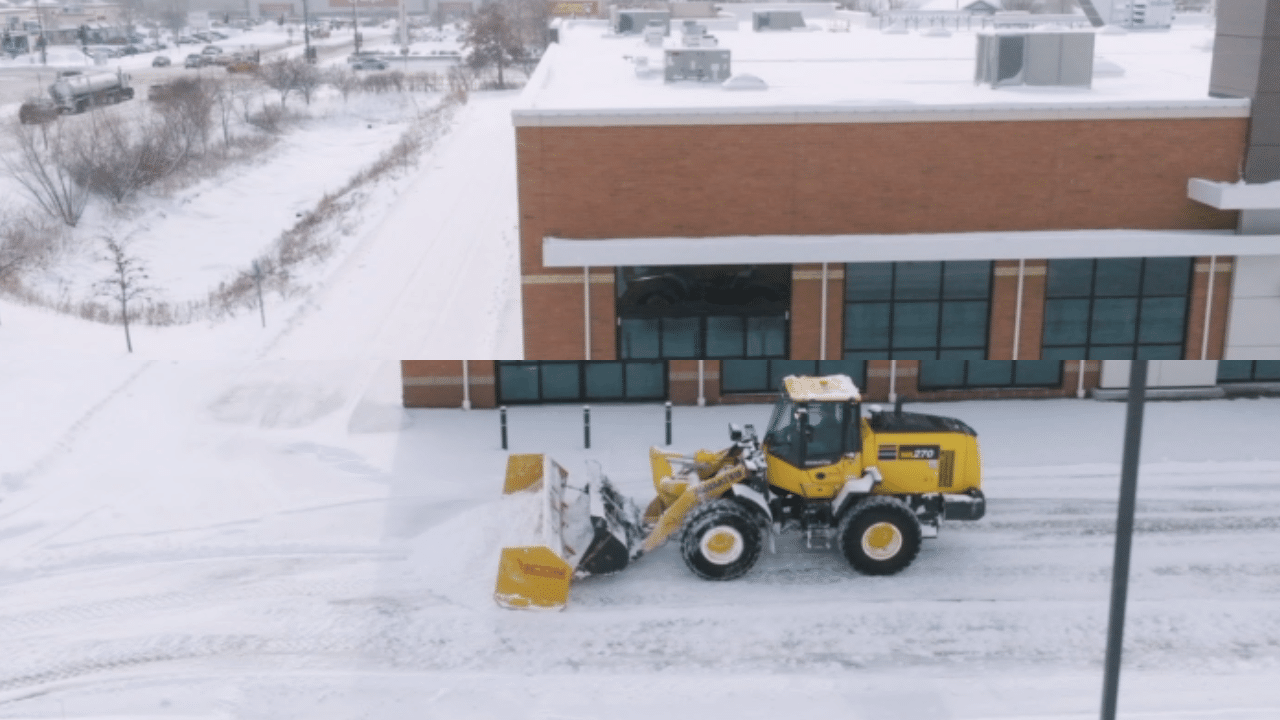
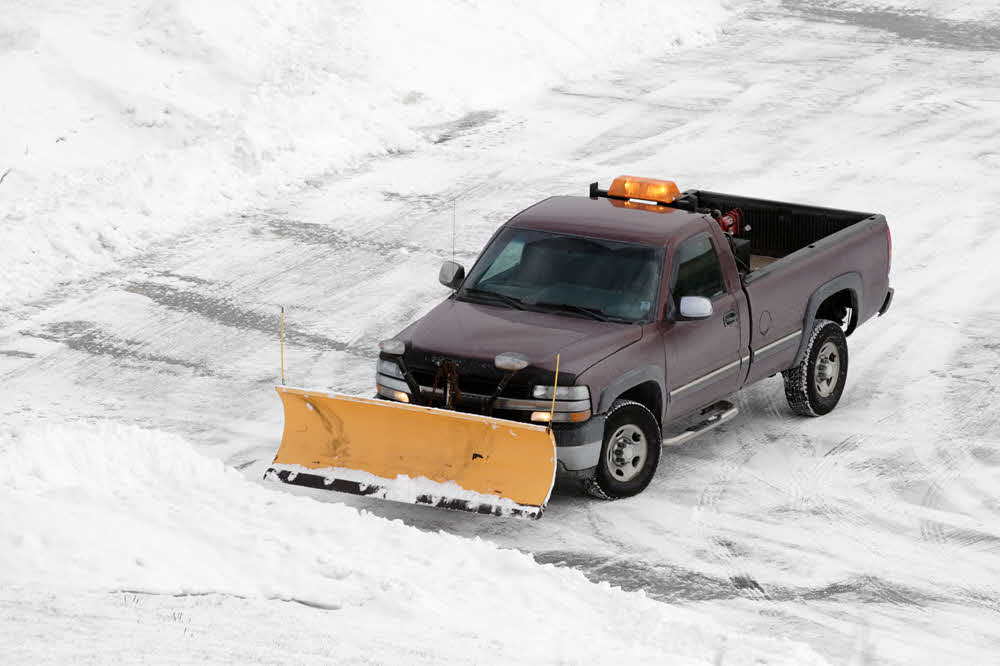
Industrial sites need more than a single machine and a quick pass. We size the crew, loader, and support equipment to match traffic volume, pile height, and the room available for turning. That matters on properties tied to M-59 and Groesbeck Highway, where access lanes stay busy and mistakes show up fast. Our wheel loader services, skid steer snow removal, and high-stacking operations work as one system so we can move snow without choking off circulation or beating up the pavement.
We plan each push around load paths, stacking zones, and the next truck in line. That keeps heavy-duty snow removal controlled instead of reactive.
Clay Frost Heave Controls Loader Work
Michigan clay moves with water and frost. That changes everything under a loader. A lot that looks firm in November can heave, soften, and rut by March if the pile sits on the wrong edge or traffic keeps packing the same line. We read the ground before we stack, then place snow where thaw runoff will not trap it. In Macomb County, that means protecting weak shoulders and keeping wheel loader services off marginal base sections.
Good loader planning starts with soil behavior, not machine size. That is how we keep heavy-duty snow removal from creating spring repairs.
Maintenance Costs Rise After Delay
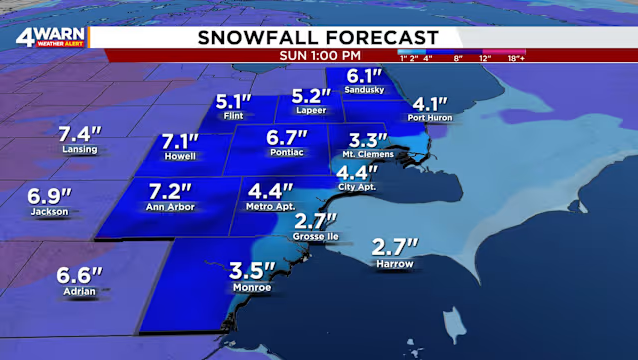
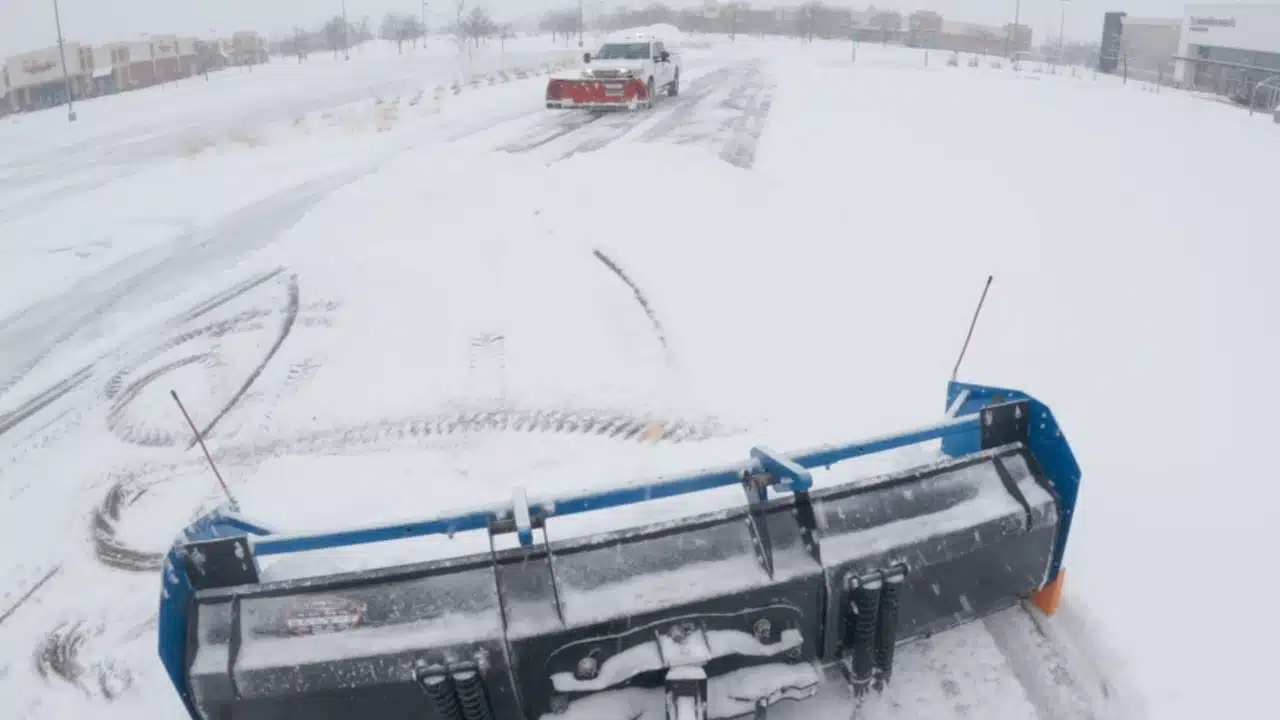
Delay drives cost up. A pile that sits too long packs hard, traps meltwater, and starts breaking down the edge of the lot. Then the fix gets bigger: more machine time, more cleanup, more risk to curbs and drainage. We plan loader work early so the site stays usable and the pavement stays protected. That is the same discipline we use on industrial snow loader services and high-stacking operations across Macomb County, because reactive work always costs more than controlled work.
No Shortcuts, No Bad Base Work
We do not push snow onto a weak base and hope it holds. If the pavement edge is failing, the subgrade is soft, or drainage has nowhere to go, we change the plan before the first bucket goes down. That protects the lot and keeps spring repairs from stacking up. In Macomb County, that kind of judgment matters on every commercial site. It is why we use loader rental with operator, high-stacking operations, and pile knock-down only where the surface can take it.

Durability Questions, Straight Answers
Durability starts with where the pile sits and how the machine travels. If we stack on weak edge pavement, the lot fails under thaw and traffic. We read drainage, base condition, and turning room before the first bucket. That is how we keep heavy-duty snow removal from turning into spring patchwork. On properties tied to Macomb County, we use wheel loader services or skid steer snow removal only where the surface can carry repeated passes without rutting.
Shortcuts show up later. Cracked curb lines, buried inlets, and soft shoulders tell the story.
Site Health Starts With Load Control
Site health shows up in the details we can measure, not the noise after a storm. We watch edge loading, pile height, runoff paths, and how the surface reacts under repeated passes. If the lot starts to flex, rut, or trap water, we change the plan before damage spreads. That is how we protect access and keep heavy-duty snow removal from turning into spring repair work. In Macomb County, that discipline matters on every commercial property.
Accountability for Every Loader Pass
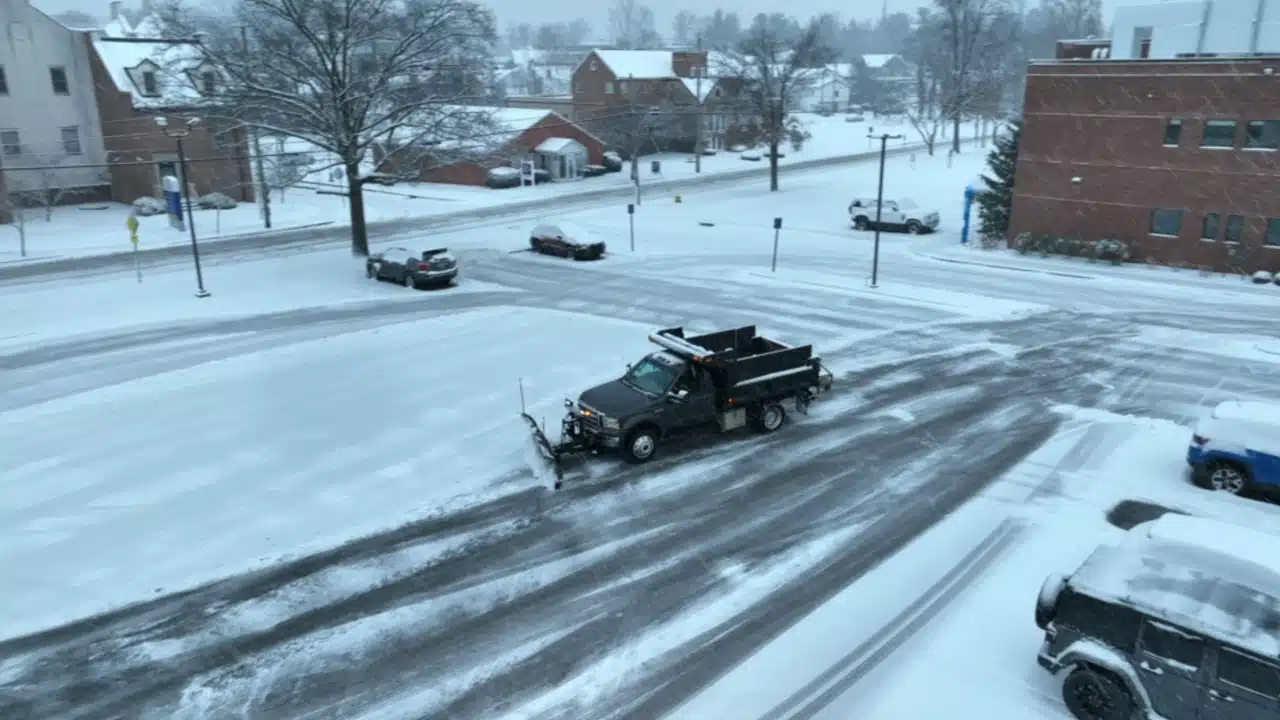
Municipal leaders trust us because we think past the storm. We plan loader routes around access, drainage, and pavement strength, then we adjust when the site tells us something different. That matters on public properties in Macomb County, where one bad pile can block runoff or damage an edge that already carries too much load. We use heavy-duty snow removal and high-stacking operations with the next season in mind, not just the next push.


Thank you again for a job well done.



Payment terms are outstanding in the last four years payments have always been on time.
The staff at D and J are great and very helpful if there is any issues.



My project involved multiple services and pulling permits and I had several quotes and most companies don’t offer multiple services or don’t pull permits and you have to do it yourself.
D & J is the only company who takes care of city permits and takes care of all the services you need from start to finish. They also update you on everything, keep you in a loop and confirms everything with you.
In our specific case we needed a curb cut, driveway leveled and parking lot sealed and coated so low sports vehicles can safely pull in without scraping the bottom and D & J did it so well you can pull in even on skateboard now.
Highly recommend D & J, top quality, smooth process.

We build loader plans the same way we build pavement plans, for the next project, not just the next storm. In Macomb County, that means protecting the base, respecting drainage, and putting snow where the site can carry it without paying for it in spring.
Plan Loader Work Before the First Storm
Before the first storm, we look at the site like an asset, not a cleanup problem. A pile in the wrong place can crush edges, trap meltwater, and shorten pavement life. We check load paths, drainage, and where equipment can travel without beating up the base. If the lot needs loader snow clearing services or high-stacking operations, we plan it around structure first. For properties in Macomb County, that kind of review protects capital and keeps spring repairs from getting expensive.
Schedule a foundation health consultation before winter starts.